
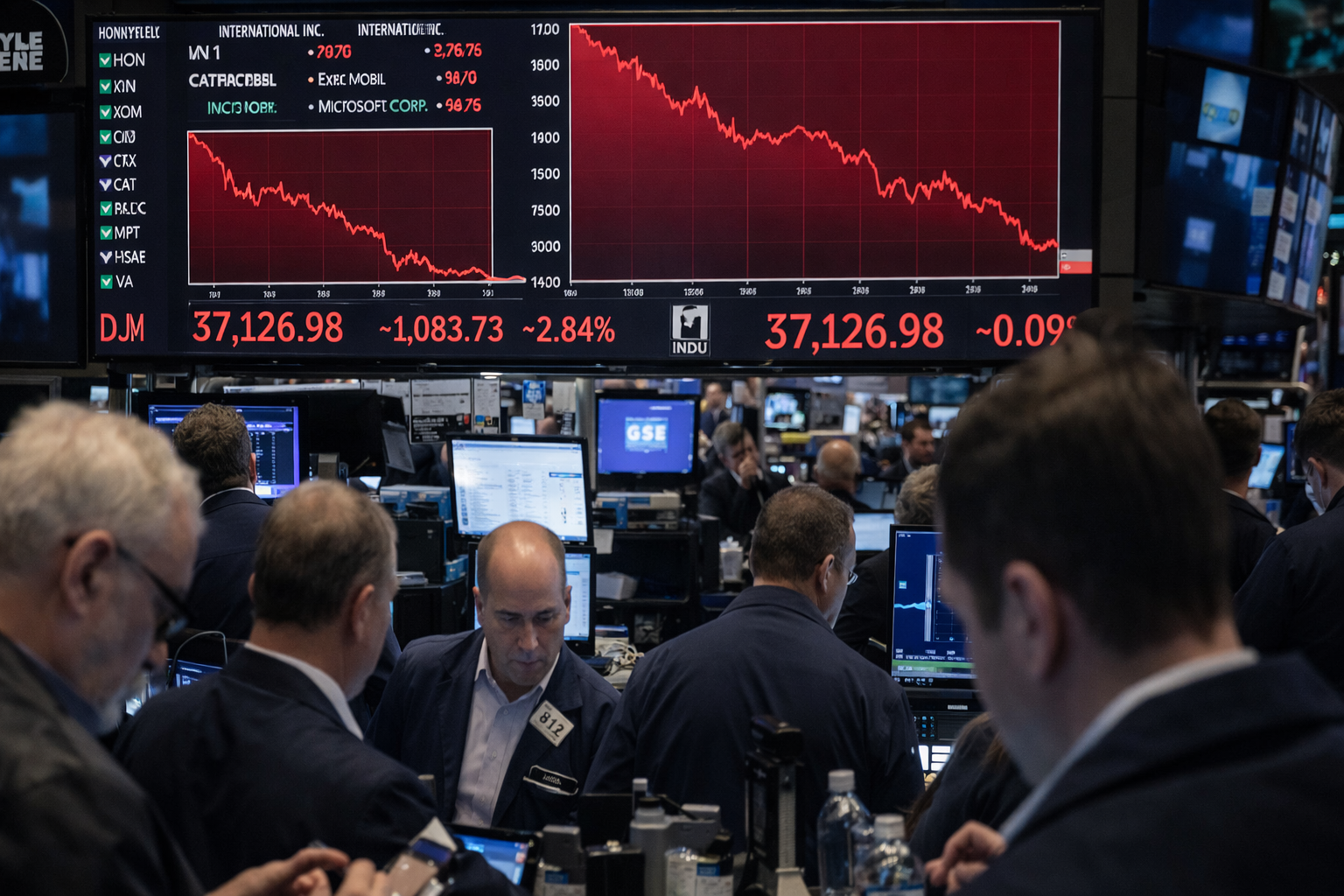
For the better part of a year, Wall Street has operated on a cynical yet profitable mantra – “Trump Always Chickens Out,” or the TACO trade.
The strategy was simple.
Whenever the White House issued a fire-and-brimstone threat – be it “Liberation Day” tariffs, the sudden annexation of Greenland, or military ultimatums – investors would wait for an inevitable market dip, buy the blood in the streets, and wait for the President to soften his stance.
Usually, a single “productive” tweet or a deadline extension was enough to send stocks into a relief rally. But on Friday, the TACO trade finally hit a wall.
Despite President Trump extending his deadline to strike Iranian energy infrastructure from March 27th to April 6, the expected rip higher never materialised.
Instead, the market looked past the delay, sensing that this time, the “chicken” might actually be a hawk.
The end of the headline fatigue hedge
The failure of the TACO trade marks a meaningful shift in investor psychology – moving from opportunistic optimism to weary realism.
In previous months, a ten-day extension like the one announced Thursday night would have been interpreted as a classic de-escalation tactic; a sign that the “art of the deal” was back in play.
However, Barclays strategist Emmanuel Cau noted that the “constant flip-flopping and headline fatigue is starting to undermine the [Trump] put efficacy.”
Investors are no longer treating the delays as a path to peace, but as a tactical pause in an inevitable march toward a wider regional war.
When Iran’s foreign minister bluntly rejected the notion of new talks on Friday, it shattered the illusion that a “chickening out” moment was imminent.
For traders who bet on a quick reversal, the realisation is sinking in – the geopolitical premium is no longer a temporary spike; it’s the new baseline.
A Pentagon pivot and the ‘troop trap’
While the President was busy signalling a pause on Truth Social, the reality on the ground was far more bellicose.
The TACO trade was essentially smothered by a Wall Street Journal report revealing the Pentagon is considering the deployment of another 10,000 troops to the Middle East.
This contradicts the very essence of the “Trump Always Chickens Out” thesis, which relies on the President avoiding long-term, costly commitments.
This fresh injection of boots on the ground suggests a shift toward “Operation Epic Fury” – an expansive air defence and ground strategy that looks nothing like a temporary skirmish.
As Adam Crisafulli of Vital Knowledge pointed out, the deferment hasn’t resulted in a rebound because “consensus view still is that the war will escalate further at some point in the coming days or weeks.”
In short, investors are now pricing in a sustained conflict rather than a tactical retreat.
Stagflation: the silent killer of momentum
Beyond these headlines, the TACO trade is dying under the weight of deteriorating macro data.
The strategy worked best when the underlying economy was sufficiently strong to absorb political volatility, but that foundation now seems to be cracking.
The Atlanta Fed’s “GDPNow” tracker has slashed Q1 growth estimates to 2% – a sharp “decline” from the 3.1% projected just a month ago.
Compounding this is the spectre of stagflation; while traders entered 2026 dreaming of Fed rate cuts, the CME FedWatch tool now shows a 52% probability of a rate “hike” by year-end.
With Brent crude hovering around $110 per barrel and energy prices driving inflation back toward 4.2%, the “Trump Put” has lost its power.
Investors are realising that even if the President delays the bombs, the economic damage from the mere threat of war is already baked in, making the TACO trade a recipe for indigestion.
The post TACO trade goes cold: why Wall Street isn’t buying Trump’s Iran extension appeared first on Invezz
